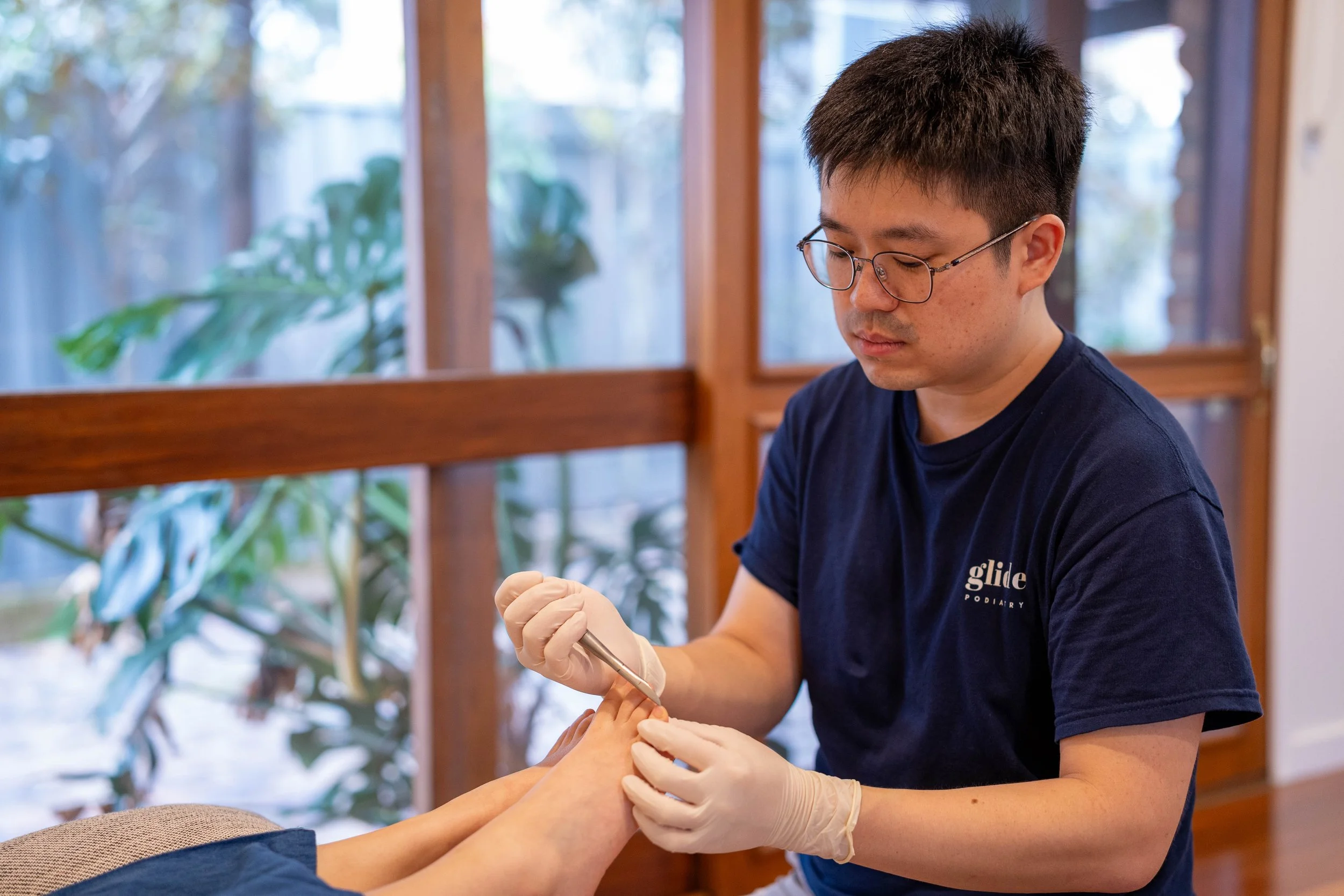
Corn & Callus Treatment in Brisbane

Professional treatment from our Hendra podiatrists to safely remove corns and calluses and prevent them from returning.
When Pressure Turns Into Pain

What starts as hardened skin can quickly become painful.

Corns and calluses develop from repeated pressure or friction, often from footwear, walking patterns, or standing for long hours.

Left untreated, they can become thick, painful, and affect how you walk.

  • What starts as hardened skin can quickly become painful.

    Corns and calluses develop from repeated pressure or friction, often from footwear, walking patterns, or standing for long hours.

    Left untreated, they can become thick, painful, and affect how you walk.

  • Corns and calluses are areas of thickened skin that form to protect your feet from pressure.

    • Corns are smaller, deeper, and often painful

    • Calluses are larger, broader, and can crack if severe

    • We focus on removing the cause, not just the skin.

      Your treatment may include:

      • Professional Removal – safe and pain-free reduction

      • Pressure Offloading – padding to reduce friction

      • Footwear Advice – prevent recurrence

      Orthotics (if needed) – correct pressure points

      • Immediate relief from pressure and pain

      • Smoother, healthier skin

      • Improved comfort when walking

      • Reduced risk of recurrence

    • Pain when walking or standing

    • Thick or hardened skin on your feet

    • Corns forming on toes

    • Cracked heels or rough skin

    If yes, treating it early prevents deeper pain and complications.

Walk Without Pain Again

Don’t let pressure build into something worse.

Book your appointment today for safe and effective treatment.

Achilles Tendinitis / Tendinopathy - Back of heel pain

Achilles tendinitis / tendinopathy is a common foot condition that affects the Achilles tendon, which is a thick band of tissue that connects the calf muscle to the heel bone. This condition is painful and can affect anyone, but more common in athletes and people who participate in sports which involve running or jumping.

Below is some information about this condition and how our podiatrist at Glide Podiatry can help you.

Before we begin

Tendinopathy is often used to refer an overuse injury (repetitive stress) that is associated with degenerative changes in the Achilles tendon.

Tendinitis can occur in people who suddenly increase their activity loads, and people who engage in repetitive activities over a longer period of time.

Research has shown that tendinopathy is more commonly associated with degenerative changes, rather than inflammation, so the term tendinopathy is now preferred over tendinitis

Achilles tendinopathy can occur at the insertion point of the Achilles tendon to the heel bone, or in the mid-portion of the band of the Achilles tendon.

The treatment plan for the two conditions are different. Therefore, it is important to get thorough evaluation from a healthcare professional to determine the diagnosis, and best treatment plan moving forward.

Symptoms of Achilles tendinopathy

The most common symptom of Achilles tendinopathy is:

  • Pain and stiffness in the back of the ankle

  • Swelling and tenderness

  • Difficulty walking or running

  • Gradual onset of symptoms in midportion tedinopathy

  • pain near the heel bone in insertional tendinopathy

A physical examination by our podiatrist can help formulate an effective treatment plan.

Why did I get it?

Achilles tendinopathy can affect all age groups, some examples of common causes and risk factors include:

  • Overuse, or repetitive strain on the Achilles tendon

  • Sudden increase in activity or intensity

  • Poor footwear or training techniques

  • Previous trauma

  • Tight calf muscles or other muscle imbalances

  • Age-related degeneration

  • Family history or genetic predisposition

pain in achilles tendon or heel

How is it diagnosed?

  • Physical examination by our Podiatrist

  • Furter tests can be referred on by your podiatrist such X-rays and ultrasounds

    • Can be used to rule out other conditions and assess the extent of the damage

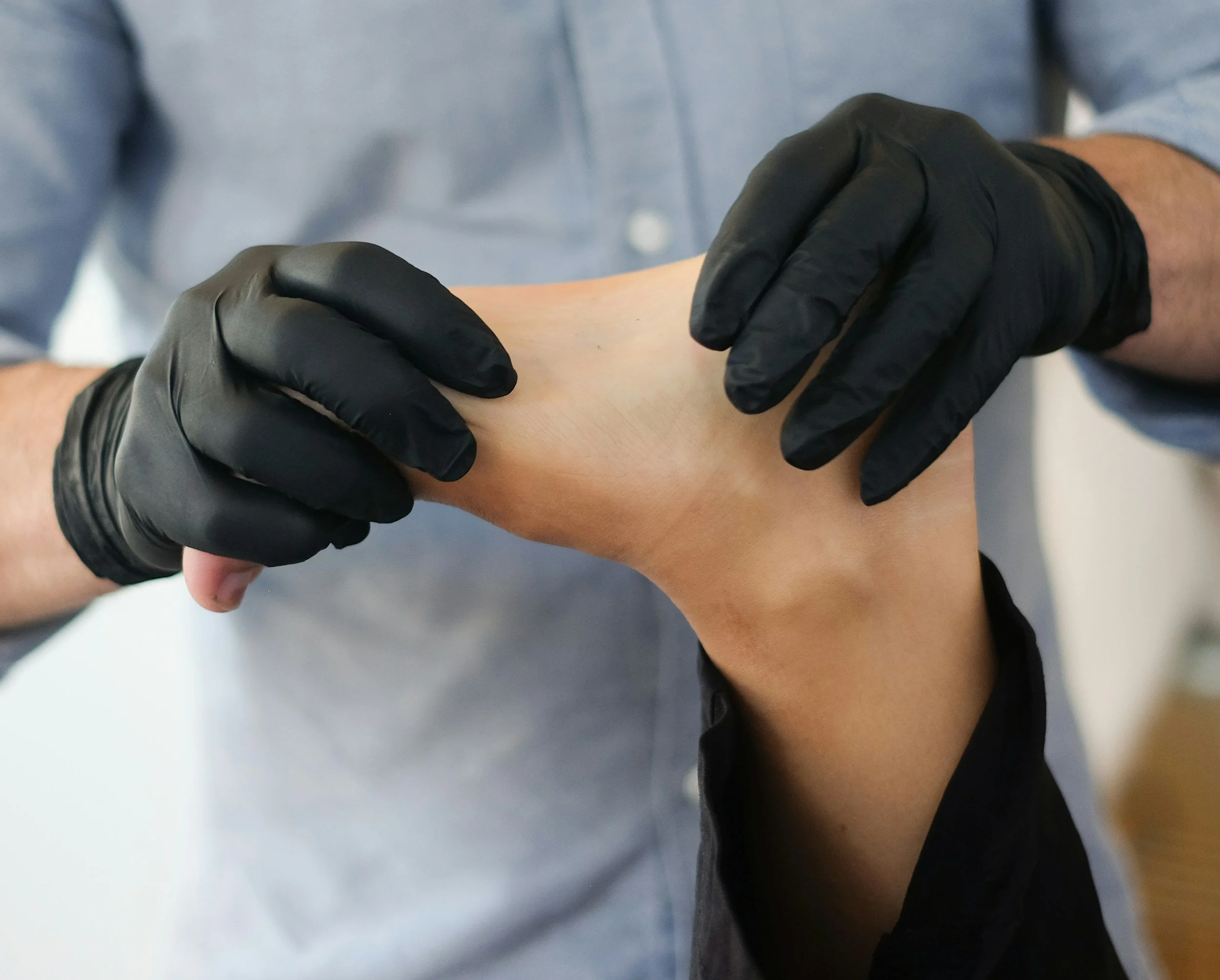
diagnosing achilles tendon pain

What treatments are there?

Most people will follow the usual procedure of taking nonsteroidal anti-inflammatory medications (NSAIDs),resting, icing, and massaging the area prior to seeking medical help.

Some of the treatments available in podiatry include.

  • Footwear advice and modification (in-shoe padding)

  • Taping

  • Strengthening and condition program (such as tendon loading), along with modifying activities.

  • Custom orthotics

  • Dry needling

  • Manual therapy (massage)

  • Foot and ankle mobilisation

Other conservative treatments which will be available in the future at Glide Podiatry

  • Extracorporeal Shockwave therapy (ESWT) to use shockwaves to stimulate healing

If conservative care fails, we can consider more invasive measures such as

  • Ultrasound guided cortisone injection - this may not always be recommended

  • Surgical repair or removal of damaged tissue

heel assessment and podiatry treatment

Concluding statement

Achilles tendinopathy is a painful condition that can affect anyone, by having a podiatrist assess you thoroughly, we can create an effective treatment plan to guide you every step of the way to quickly get you back into what you love doing most.

Visit our Hendra clinic today if you are experiencing pain in the Achilles Tendon

Make an appointment with Philip below.

Servicing the residents of Brisbane

Hendra, Ascot, Hamilton, Clayfield, Albion, Nundah, Clayfield, Eagle Farm, Northgate, Wavell Heights, Kedron, Gordon Park, Lutwyche, Windsor, Newstead, Stafford, Grange, Kelvin Grove

Key words: Achilles tendon pain, pain at the back of the heel, calf pain